COLLECTOR AVAILABILITY GUIDE
How Long Are Pokémon Sets Printed?
There is no fixed public timer for a Pokémon set. Here is a calmer way to understand availability, reprints, and the decision to buy now or wait.
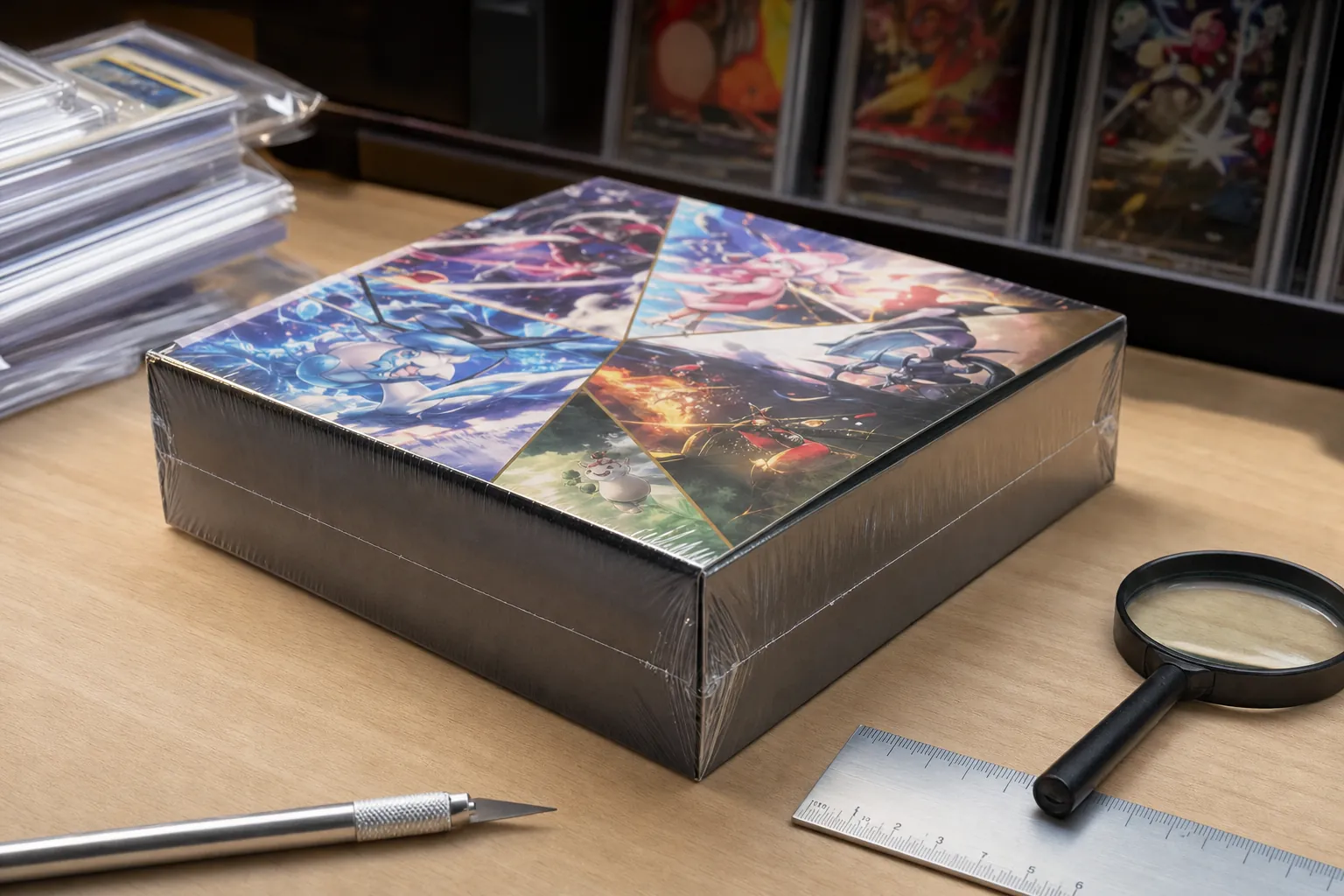
Collectors often ask how long a Pokémon set stays in print because they are trying to avoid two frustrating outcomes: missing a product they genuinely wanted, or rushing into a purchase because somebody said it was disappearing. The honest answer is that Pokémon does not publish one fixed print timetable that applies to every expansion, box, or retailer. A set can be easy to find, suddenly scarce, restocked later, and still feel different from one store to the next.
That does not mean availability is impossible to read. It means the useful question is not “what exact date does this set stop printing?” It is “what do the current signals say, and does this product fit my collection at today’s price?” This guide helps you make that call without treating a stock notice or a social post like a deadline.
There is no public countdown for every Pokémon set
Pokémon releases give collectors a clear starting point. Official product pages identify the expansion, launch date, and product format, which is useful for comparing like with like. What they do not provide is a universal end date for printing. Production, retailer orders, regional distribution, demand, and the product itself can all shape how long something stays easy to buy.
That matters because “in print” is often used as if it means “available everywhere.” It does not. A product can be unavailable at one retailer while another still has it. A store may receive a small restock after a quiet stretch. A popular product may sell through quickly even while more units are being made. Treat availability as a moving picture, not a switch that flips from available to gone.
The Pokémon Company has said that it works to replenish impacted products and may continue reprinting products affected by high demand. Its product-availability update is a useful reminder that a sellout alone does not confirm a set has finished printing. It also does not promise that every product will return on a collector’s preferred schedule.
Think in phases, not a single print-run date
A new expansion usually has an early release phase, when launch products arrive and excitement is highest. Some formats sell out fast because many people want to open them at once. Then comes a wider availability phase, when restocks, different product formats, and more retailers can make the set easier to find. Later, supply may become less consistent. That can mean smaller restocks, fewer retailers carrying the item, or more attention on the remaining sealed products.
These phases are not a guarantee and they do not happen at the same pace for every release. Special collections, Pokémon Center exclusives, premium boxes, and ordinary booster products can behave differently. A popular release can feel tight early, while a less-hyped product may stay on shelves longer. The goal is not to predict a precise finish line. It is to recognize whether a product is broadly available, unevenly available, or genuinely becoming harder to locate.
For the basics of a release, use an official Pokémon expansion or product page before comparing listings. For example, product pages identify which items launch with an expansion and what each format contains. That helps prevent a common mistake: comparing a booster bundle, Elite Trainer Box, and booster box as if they are interchangeable. Our Elite Trainer Box versus booster box guide can help you choose the format that actually suits your plan.
What a real restock can, and cannot, tell you
A restock is evidence that more product reached a retailer. It is not, by itself, proof of a brand-new print run, a long-term supply promise, or the exact number of boxes still coming. Stores can receive inventory at different times, hold stock for promotions, or list the same shipment in waves. One retailer’s “back in stock” email is useful information, but it is only one piece of the picture.
Look for patterns across several reliable sellers. If the same product returns broadly over time, it is reasonable to treat it as available rather than panic-buying the first listing you see. If restocks are brief, stock is disappearing across several established retailers, and comparable products are also becoming less common, that is a stronger reason to slow down and decide whether the set belongs in your collection now.
Do not confuse a marketplace listing with a restock. Marketplace sellers may be listing older inventory, testing a price, or selling a different language or configuration. Read the exact title, product details, and condition notes. Our guide to buying Pokémon booster boxes safely explains how to compare those details before you buy.
Use availability signals that are worth your attention
Start with official information. The Pokémon Trading Card Game site is useful for confirming an expansion and seeing current product news. Then compare several established retailers, including the exact language and configuration you want. A Japanese box, an English booster box, and a collection box with mixed packs should not be treated as one supply pool.
Next, watch the quality of availability rather than only the cheapest price. Is the product easy to find at normal retailers? Are there several credible listings in the same price range? Does stock return after a sellout? Are the only remaining listings vague, badly photographed, or much more expensive than the ones you saw a week ago? The answers are more useful together than any single badge saying “only two left.”
Finally, separate a collecting signal from a market rumor. A favorite Pokémon, art style, or sealed-shelf goal is a valid reason to buy. A viral claim that a set is “about to disappear” is not enough on its own. If a purchase is for opening, choose a set you will enjoy even without a big pull. If it is for display, inspect the box condition and plan where it will live. The Pokémon card storage guide covers the simple habits that keep a collection easy to enjoy.
When it makes sense to buy now
Buying now can be sensible when the exact product already fits your collecting goal, the price is fair beside comparable listings, and the seller gives you enough information to buy comfortably. You do not need proof that a set is on its final print run to choose something you genuinely want. In fact, waiting for certainty can turn a simple collecting decision into a stressful prediction game.
Use a short checklist before checkout: Do I want this set or am I reacting to scarcity talk? Is this the correct language and product format? Does the price make sense after shipping and tax? Would I be happy with this purchase if the product became easier to find again next month? If the answer is yes, you have a more grounded reason to buy than a rumor could give you.
For an opening, keep the expectation tied to the experience, not a promised return. Pokémon’s own product guide explains that booster packs are randomly packed. Pick the set because you enjoy the cards, artwork, or occasion, then let a great pull be a bonus. If you are after one exact card, a single may be the simpler and more predictable route.
When waiting is the better move
Waiting can be smart when you cannot tell what you are buying, the product is far above a normal price range, or the purchase does not have a clear place in your collection. It can also be the better call when your budget is already committed to another goal. A product being harder to find does not make it automatically right for you.
Give yourself room to compare. Watch a few reputable listings, save the exact product name, and decide what price feels comfortable before you encounter a dramatic low-stock message. If the product returns, you may be glad you did not overpay. If it does not, you will still know that the decision came from your own collecting priorities, not from a rushed checkout.
Collectors comparing imported products have another reason to pause. Release timing and packaging can differ between languages. The Japanese versus English Pokémon cards guide explains the practical differences, while the Korean Pokémon booster box guide can help you decide whether that format fits your budget and opening plans.
Keep scarcity from running the hobby
The most useful availability skill is patience. A set being popular does not make it a must-buy. A restock does not mean you should buy multiples. A higher marketplace price does not prove that every remaining box is special. Keep your focus on the part of the hobby you want to enjoy, whether that is opening packs, building a binder, finding a gift, or displaying a favorite sealed product.
If you want a bigger picture of current availability, pair this guide with our look at which Pokémon sets are still being printed and our Pokémon reprints guide. Both are designed to help you read the market without asking you to treat every rumor as a deadline.
Common mistakes to avoid when watching a set
The first mistake is treating an online price chart or one auction result as the whole market. A completed sale can reflect a damaged box, a special variation, a bundle, a different language, or a buyer who needed the product immediately. Compare the exact item across several recent, credible listings before deciding that a price move is real.
The second is buying more than your collecting goal calls for because a product might become scarce. If one box would make you happy, a stack of boxes bought in a hurry may not. Leave space in the budget for releases, singles, and supplies you will actually enjoy later. If you do choose a sealed product, protect it from heat, moisture, and shelf pressure so it stays in the condition you meant to keep.
The third is assuming that a product returning to stock must be a bargain. A restock can be a good chance to buy something already on your list, but it does not turn every product into a necessary purchase. The best time to buy is when the product, condition, price, and seller all make sense together.
A five-minute availability check before checkout
First, write down the exact set name, language, and product format. Second, open two or three established listings and compare the complete cost, not just the price in large type. Third, check whether the seller explains condition and shipping clearly. Fourth, ask yourself whether you would still want the product if another restock appeared next week. Finally, decide once, then stop refreshing every listing. That small routine keeps useful availability research from swallowing the part of collecting that should be fun.
How Cardboard Superstars helps
Cardboard Superstars helps collectors compare current products without turning a purchase into a pressure decision. Browse the Pokémon collection for available products, use the release calendar to see what is coming, and visit Contact if you need a straightforward answer about a listing before you buy.
Frequently asked questions
How long do Pokémon sets stay in print?
There is no one public timetable that applies to every Pokémon set or product. Availability can change with demand, production, retailer orders, and region. Watch broad availability and credible restocks rather than relying on a claimed end date.
Does a sold-out Pokémon set mean it is out of print?
No. A sellout can reflect a short-term demand spike, a retailer’s inventory timing, or a product that may be replenished later. Compare several reliable sellers and look for a longer pattern before treating a set as difficult to find.
Are Pokémon reprints announced in advance?
Pokémon may share product availability updates, but collectors should not assume every reprint or restock will have a detailed public announcement. Use official product information and real retailer availability instead of rumors.
Should I buy a Pokémon set before it goes out of print?
Buy when the exact product fits your collection, the price is fair, and you trust the listing. Do not buy solely because someone predicts scarcity. A purchase is easier to enjoy when you would still feel good about it if availability changed later.
KEEP EXPLORING
Related posts
 Collector guide
How to Start Collecting Pokémon Cards
A calm beginner plan for choosing a collecting goal, buying your first cards, protecting them, and keeping the hobby fun.
Collector guidePokémon Sets Going Out of Print in 2026: What Collectors Should Watch
Learn the practical signs collectors can watch when deciding whether a Pokémon set may be getting harder to find.
Collector guideHow to Buy Pokémon Booster Boxes Safely
A practical checklist for choosing a seller, inspecting sealed product and buying the right box for your collection.