
COLLECTION RESET
How to Organize Pokémon Cards: A System That Grows With You
Turn the loose-card pile into a collection you can find, protect, and actually enjoy without rebuilding it after every new pack.
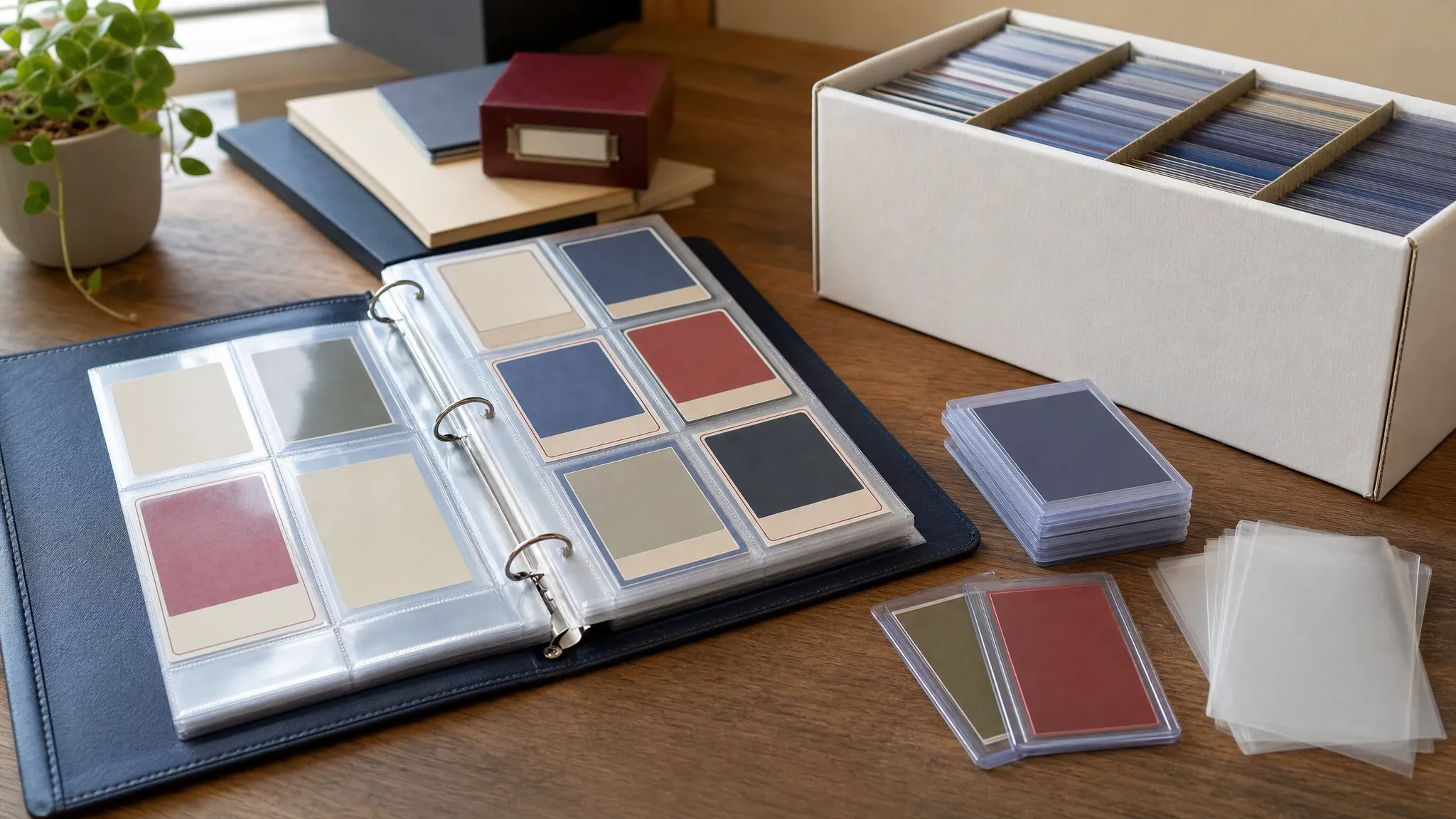
A pile of Pokémon cards is not a failure. It is usually proof that the hobby is working. Packs get opened, trades happen, a favorite card needs a safer spot, and suddenly the system that made sense for one binder no longer fits the collection on the desk.
The answer is not one perfect order that every collector has to copy. It is a simple system that gives each card a job. When a new card arrives, you should be able to decide where it goes in a few seconds. That makes the collection easier to browse, easier to protect, and much easier to enjoy.
Start by sorting cards by job
Before sorting by set, rarity, or favorite Pokémon, make five loose groups: cards you want to display or protect closely, cards going into a binder set, cards for a deck, duplicates you may trade or sell, and bulk you want to keep. A card can only do one job at a time. If a favorite pull belongs in a display holder, it does not need to compete for space with the commons you are saving for a future deck.
This first pass is where most collections become easier. It stops a binder from turning into a catch-all and gives you a clear place for the cards you do not want to lose track of. If you are unsure how much protection a keeper needs, start with the site’s guide to Pokémon card sleeves and top loaders.
Choose a sorting order that matches your goal
There are a few sensible ways to sort, and each is better for a different kind of collector. A set collector usually benefits from set name, then card number. That makes missing cards obvious and keeps a completed page satisfying to browse. A character collector may prefer one Pokémon, artist, or theme together, even when the cards come from many releases. A player may want decks and playable cards grouped by format or type, separate from the cards that are just there because they look great.
Pick one main rule for each group. Trying to sort the same binder by set, rarity, Pokédex number, and value at once is how a satisfying project turns into a pile of half-moved cards. The goal is not a museum catalog. It is being able to find a card when you want it.

Give the cards you keep a safe home
Use a binder for cards you want to look through, a rigid holder for a card you want to display or set aside, and a divided card box for bulk and duplicates. Sleeve cards before they go into a binder or holder when their condition matters to you. A clean, stable indoor space is the best home for the whole collection. The Library of Congress recommends keeping paper items away from moisture, direct light, and big swings in temperature, which is practical advice for cards and cardboard storage boxes too.
Do not force thick cards into a standard pocket or overfill a binder until pages bow. Leave a little room for the collection to grow. The site’s Pokémon card storage guide has a closer look at binders, boxes, and stable storage spaces when you are setting up the physical side of the system.
Keep duplicates out of your main binder
Duplicates are useful. They can be trade material, cards for a deck, a backup copy, or something a younger collector would love. They become frustrating only when they live everywhere. Keep one labeled row, box, or envelope for duplicates you would trade or sell. Sort it broadly enough that you can find cards later, such as by set or Pokémon type, without spending hours filing every common card by number.
For large amounts of bulk, labels matter more than fancy containers. Write a clear category on each divider or box: “Scarlet & Violet commons,” “trainers,” “energy,” or “trade stack.” If someone else needs to find a card, they should not have to ask you what each pile means.
Make a small intake routine for new cards
The easiest way to stay organized is to avoid creating a new mystery pile every time you open packs. Keep one tray or small box for cards that have not been filed yet. After an opening, pull out the favorites first, decide whether anything belongs in a binder set, place duplicates in their trade group, then put the rest in bulk storage. It takes a few minutes and prevents a big reset later.
A collection tracker can help if you enjoy checking off a set or remembering which cards are available for trade, but it is optional. A simple note on your phone or a small spreadsheet is enough. The physical organization should still make sense even if you never log another card.
Leave room for the collection to change
Your first system does not have to be permanent. A binder that starts as a favorite-Pokémon collection may become a set binder later. A trade box may turn into deck-building stock. That is normal. Choose storage that makes it easy to move cards without damaging them, then adjust one section at a time instead of dumping the entire collection onto the floor.
When you buy new product, buy the opening experience you actually want, not just more cards to sort. The guide to starting a Pokémon card collection can help you set a collecting focus, while the Pokémon collection and collector supplies pages make it easy to match the next purchase to that plan.
A 20-minute collection reset
- Clear one clean surface and bring out sleeves, a binder, and your storage box.
- Make five piles: keepers, binder cards, deck cards, trade cards, and bulk.
- Choose one sorting rule for each pile.
- Sleeve the cards that matter most to you before filing them.
- Label every box or divider in plain language.
- Put one small intake tray near where you open packs, so the next batch has a home.
How Cardboard Superstars helps
Cardboard Superstars makes it easy to build a collection around what you genuinely enjoy, then keep the cards you love ready to browse, trade, or display. Browse the current Pokémon selection, find sleeves and storage on the collector supplies page, or visit Contact when you need help choosing the right protection for a card or sealed box.
Frequently asked questions
What is the best way to organize Pokémon cards?
The best system is the one you can keep using after every pack, trade, or mail day. Give your favorite cards, binder sets, decks, duplicates, and bulk separate homes, then sort each group in the way that makes it easiest for you to find again.
Should I organize Pokémon cards by set or by Pokémon?
Organize by set and card number when you are building a set binder or want to see what you are missing. Organize by Pokémon, artwork, or theme when the collection is personal and visual. Keep duplicates and bulk separate so either approach stays easy to maintain.
What should I do with duplicate Pokémon cards?
Keep a small, clearly labeled trade or sale stack for duplicates you may move on. Put the rest in a divided storage box by set, type, or another simple label. Do not let duplicates take over the binder that is meant for the cards you are actively collecting.
Do Pokémon cards need to be sleeved before going in a binder?
Sleeves are a useful first layer for cards you value, especially in a binder you open often. Use clean, properly sized sleeves and binder pages that hold cards flat without forcing or overfilling them.
KEEP EXPLORING
Related posts
 Collector guide
How Long Are Pokémon Sets Printed?
Understand Pokémon set availability, reprints, restocks, and the practical signals collectors can use before deciding to buy or wait.
 Collector guide
How to Start Collecting Pokémon Cards
A calm beginner plan for choosing a collecting goal, buying your first cards, protecting them, and keeping the hobby fun.
Collector guidePokémon Sets Going Out of Print in 2026: What Collectors Should Watch
Learn the practical signs collectors can watch when deciding whether a Pokémon set may be getting harder to find.