
POKÉMON COLLECTING
Pokémon Reprints: What Collectors Should Know Before Buying
A calm way to understand reprints, compare the product in front of you, and keep a possible restock from turning into a rushed decision.
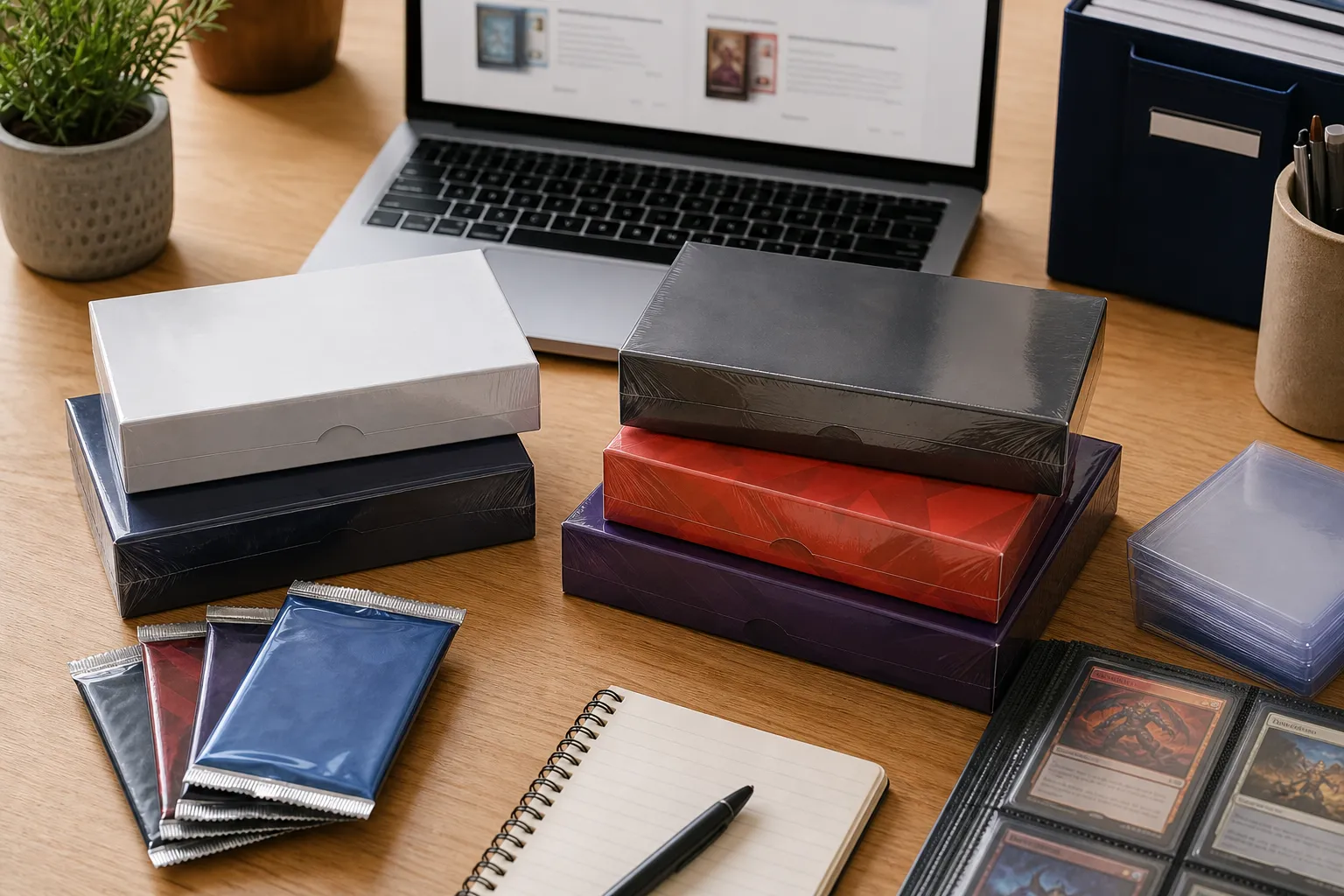
Pokémon reprints get collectors talking because they can change what is on the shelf, what a box costs this week, and how urgent a purchase feels. The word can also get used loosely. One person may mean a familiar sealed product returning to stores. Another may mean a favorite card showing up again in a later release. A third may simply mean that a shop has restocked.
Those situations are connected, but they are not interchangeable. The useful question is not whether every reprint is good or bad. It is what changed for the exact product or card you want, and whether that change helps you make a better choice. This guide gives you a practical way to read that moment without letting rumor, frustration, or fear of missing out run the purchase.
Start by naming what was actually reprinted
Before you compare prices, get specific. A sealed booster box, an Elite Trainer Box, a Booster Bundle, a collection box, and loose packs can all relate to the same expansion, but they are different products. They can arrive in different quantities, be sold through at different speeds, and appeal to collectors for different reasons. More of one does not automatically mean more of all of them.
The same is true for individual cards. A character, illustration, or game effect can return in a different printing without being the same item a collector already owns. Set symbol, card number, language, rarity treatment, condition, and product source all matter. The official Pokémon Trading Card Game site is useful for understanding releases and the game itself. The exact listing is still where you confirm what is being sold.
That little bit of precision saves a lot of unnecessary disappointment. It keeps you from treating a different product format as a substitute when it is not, or paying a premium because a seller made a broad claim sound more dramatic than the actual item deserves.
A restock is not always a reprint
Sometimes a product looks scarce because a retailer sold through its allocation, a distributor shipment is late, or one store chose not to restock right away. Sometimes it is simply back in stock because more inventory reached that seller. Neither event tells you, by itself, how much product exists in the wider market.
Instead of making a decision from one low-stock notice, compare a few established sellers over a little time. Are they carrying the same set, language, and product format? Is the product appearing at normal prices in several places? Are new listings arriving steadily, or is a single seller the only source? Patterns are more useful than screenshots.
For collectors who are trying to read availability rather than predict the future, our guide to Pokémon sets that are still being printed explains the signals worth watching. A possible reprint can be part of the story. It is not a reason to ignore the product details, condition, or seller in front of you.

What a reprint can change
More availability can be a relief. It may give collectors a fairer chance to buy a current product, compare sellers, or pick up cards for a deck without feeling forced into a rushed checkout. It can also make it easier to wait for a cleaner box, a better-supported seller, or a product format that actually suits the way you collect.
It can change prices too, especially when a product had become difficult to find. But price is never one simple scoreboard. A box can be easier to buy and still be worth keeping because you like the set. A card can become more affordable and still be meaningful in a binder. Another version can remain distinct because of its language, release, art, condition, or collector interest.
This is why a reprint should be treated as information, not a verdict. If your goal is opening packs, the best outcome may be getting the set you genuinely enjoy at a sensible total price. If your goal is a sealed shelf, you may care more about choosing a clean copy and storing it well than about guessing the next price move. If you want one card, buying the single may still make more sense than chasing it through sealed product.
Compare like with like before judging a price
The most common mistake around Pokémon reprints is comparing products that only look similar. An English booster box is not automatically comparable to a Japanese box. A smaller pack-focused product is not automatically comparable to a larger product with accessories. A box with corner wear is not equivalent to a clean display piece, even when the set name is the same.
Build a quick comparison before you decide a listing is a bargain or a warning sign: exact expansion, language, product format, pack count, condition, shipping cost, seller support, and total checkout price. A few minutes spent on this list makes it easier to see whether new availability is actually helping you, or whether the item is simply different from the one you meant to buy.
Use the Japanese versus English Pokémon cards guide when language is part of the decision. If you are choosing between more packs and a more complete opening experience, the Elite Trainer Box versus booster box guide helps clarify the difference. There is no prize for buying the biggest box if a different format suits your plan better.

Use a buying checklist after a reprint
A reprint or broad restock can make the market feel easier, which is exactly when it helps to use the same small routine every time. You are not trying to outsmart every other collector. You are confirming that the item is the right fit before you spend money.
- Name the exact product: Write down the expansion, language, and format you are willing to buy. This stops a broadly similar product from filling the slot by accident.
- Compare the full price: Include shipping and tax, then compare a few reputable listings. A lower sticker price is not always the lower total.
- Read condition notes: Decide how much packaging wear you can accept before browsing. That is especially useful when a sealed box is meant for display.
- Check what the product contains: Pack count and included extras can differ by product format. Use the listing, not a thumbnail or a secondhand description, as your final reference.
- Leave room to pass: If the item is unclear, damaged, or outside your budget, let it go. More availability should give you more choices, not pressure you into the first one.
This checklist is deliberately simple. The best collecting habits are usually the repeatable ones. Once the basics are clear, you can enjoy the part that brought you to the hobby in the first place: choosing a set, opening packs, building a binder, or putting a favorite box on the shelf.
Do not let a possible reprint make the choice for you
Collectors often get pulled in opposite directions. One message says to buy immediately because a product will never be seen again. The next says to wait because a reprint is guaranteed. Both can make a normal hobby purchase feel like an emergency. The honest answer is that outside observers do not control your budget, your collecting goals, or the condition of the listing you are considering.
Buy now when the exact product is available from a seller you trust, the condition is right, and the full price fits your plan. Waiting is sensible when the listings are vague, the price is far above comparable options, or you are not sure you even want that format. Passing is also a valid move when you are reacting to noise rather than to something you would enjoy owning.
Our guide to Pokémon sets going out of print covers the other side of the same decision. Availability matters, but it should not turn a thoughtful purchase into a race. A collection gets better from choices you are still glad about after the headlines quiet down.
Keep your authenticity and condition standards
New demand or tight availability can make a questionable listing feel tempting. Do not lower your standards just because a product appears harder to find or somebody calls it the last chance. Read the full title. Confirm the language, set, and configuration. Look at the actual condition notes and photos. Make sure there is a clear way to contact the seller if something is wrong.
A reprint does not answer the separate question of whether a pack, box, or single is authentic. Officially produced reprinted cards are real, but any purchase still deserves the ordinary checks. Our guide to spotting fake Pokémon packs explains what to look for when packaging, photos, or seller details do not line up. For larger sealed purchases, use the booster box safety checklist before checkout.
Condition deserves the same patience. A sealed box can be available, yet still not be the copy you want to display or keep. Look for corner wear, crushed edges, loose or damaged wrap, and whether the photos actually show the item being sold. More supply gives you room to choose carefully. Use it.
Make a small plan instead of chasing every update
You do not need to follow every release rumor, restock post, or social-media debate. Pick the sets and product formats you actually care about. Decide whether each one is for opening, gifting, playing, a binder, or sealed storage. Set a price range you can live with, then check a few established sellers when it is time to buy.
This approach creates a useful pause. If the product becomes easier to find, you can compare calmly. If it becomes harder to find, you know what your maximum price is and can avoid a panic purchase. If a reprint does arrive, you can decide whether it improves your options instead of feeling as though you have to react instantly.
Once you have found a sealed product worth keeping, protect the decision you made. Keep the box dry, out of direct sunlight, and away from crowded stacks that press on corners. The Pokémon booster box protector guide can help with a fitted display layer, while the sleeves and toploaders guide covers the cards you decide to open and save.

How Cardboard Superstars helps
Cardboard Superstars gives collectors a clear place to compare current Pokémon products without treating every release or box format as interchangeable. Start with the Pokémon booster box guide when you are deciding what kind of sealed product fits your goal, or browse the current Pokémon selection once you know the set, language, and format you want.
Read the listing details as your final check, especially when condition, language, or configuration is important. The collector supplies selection is there when you want protection ready for a favorite box or card, and the contact page is available when a product detail is the deciding factor before checkout.
Frequently asked questions
What does a Pokémon reprint mean?
A reprint means more of a product or card is made available after its first release. It can refer to a sealed product returning to stores, a card appearing again in a later product, or another release that gives collectors a similar card or experience. The exact product still matters.
Do Pokémon reprints make cards worth less?
A reprint can increase supply and change short-term prices, especially for cards people want to play. It does not make every card, sealed box, or version equally affected. Condition, rarity, the specific release, collector demand, and the reason you bought it still matter.
How can I tell whether a Pokémon product was reprinted?
Look for a sustained return of the same exact product across established sellers, rather than one isolated listing. Compare the set name, language, format, pack count, condition, and release details before treating new availability as proof that a product was reprinted.
Should I wait for a Pokémon reprint before buying?
Waiting can make sense when the only listings available are overpriced, unclear, or not the exact version you want. Buying can make sense when a trusted seller has the right product in the right condition at a price that fits your plan. A possible reprint should inform your choice, not make it for you.
Are reprinted Pokémon cards fake?
No. Officially produced reprinted cards are real Pokémon cards. Authenticity is a separate question. When you are buying packs, singles, or sealed product, still check the seller, photos, product details, and condition before you pay.
KEEP EXPLORING
Related posts
 Collector guide
How to Organize Pokémon Cards: A System That Grows With You
A practical way to sort Pokémon cards, protect the keepers, manage duplicates, and keep every new pack from becoming another loose pile.
 Collector guide
How Long Are Pokémon Sets Printed?
Understand Pokémon set availability, reprints, restocks, and the practical signals collectors can use before deciding to buy or wait.
 Collector guide
How to Start Collecting Pokémon Cards
A calm beginner plan for choosing a collecting goal, buying your first cards, protecting them, and keeping the hobby fun.