
BUY WITH CONFIDENCE
How to Tell if Pokémon Cards Are Fake
Use a calm, repeatable check before you buy, trade, or decide whether a card belongs in your collection.
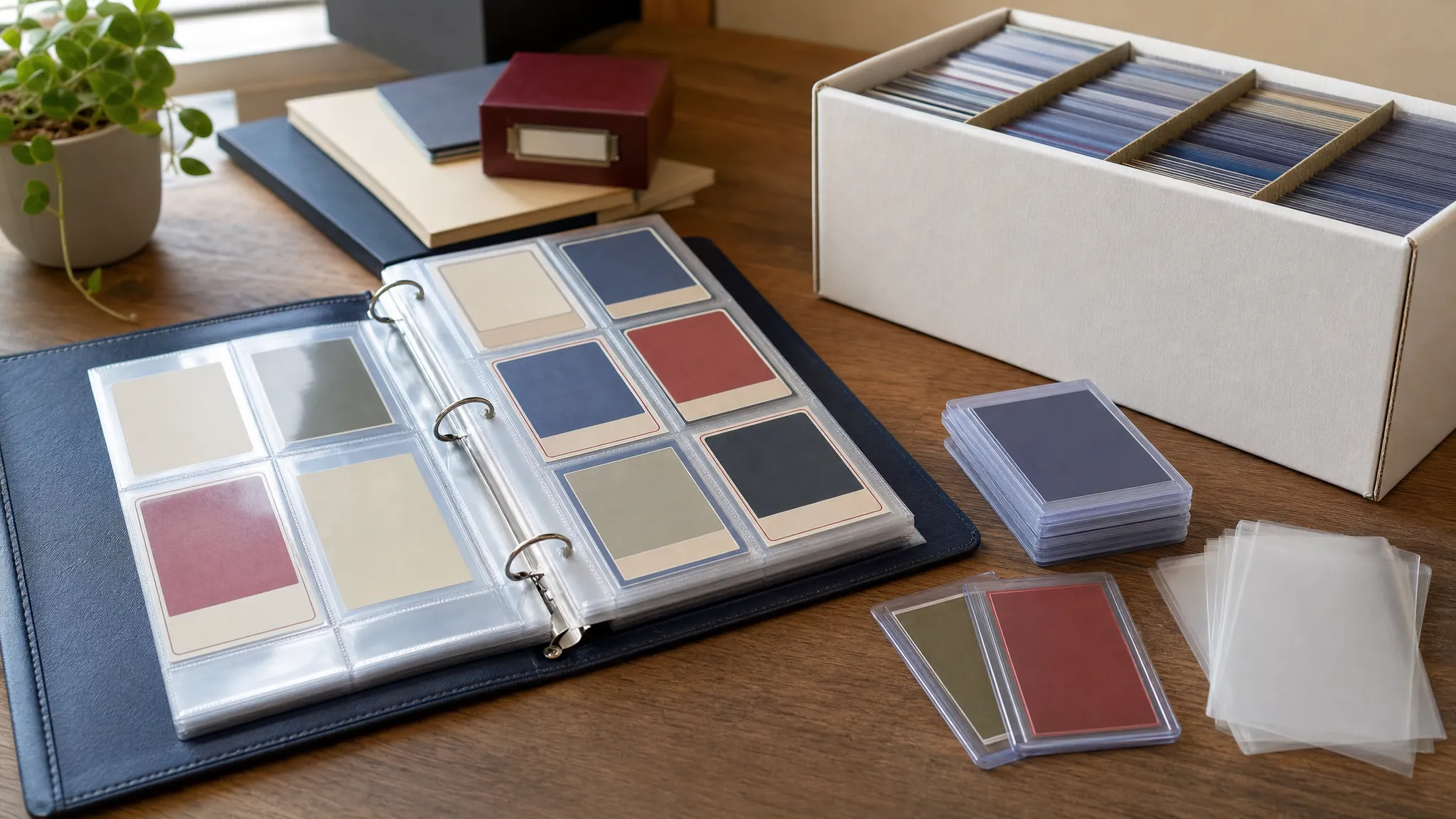
The most useful way to tell if a Pokémon card is fake is not a single trick. It is a comparison. Put the card beside a trustworthy reference for that exact release, then check the details that should agree: the name, card number, artwork, text, HP, attacks, rarity, finish, and card back. When several details do not line up, pause before you buy, trade, or list the card as real.
That approach is kinder to beginners and more reliable for experienced collectors. Pokémon cards have changed over time. Older cards, different languages, special promos, and premium products can look very different from one another. A card does not need to resemble a modern English card to be genuine. The goal is to compare it with the right real version, not with a memory of what a Pokémon card “should” look like.
Start with the exact card you are checking
Before inspecting print quality, identify the card. Note the Pokémon name, card number, set symbol or set name, language, and card type. A card number can include a number beyond the main set total, so do not call it fake just because it appears unusual. Look for the same card in an official database, a reliable set checklist, or clear images from a trusted card seller.
The official Pokémon Trading Card Game site is a sensible first stop for current products and card information. When the exact release is older or the card is in another language, use more than one reliable comparison image. Make sure the reference matches the card’s language, set, and version before you judge a small detail.
This first step prevents a common mistake: comparing a special version to a base card, or comparing a Japanese release to an English release and treating normal differences as proof of a fake. One correct reference is worth more than ten general “real versus fake” pictures.
Check the printed facts before the feel
Printed facts are often the easiest things to verify. Compare the card name, HP, type, attacks, damage, retreat cost, weakness, resistance, illustrator credit, and card number with the reference. Read the small text too. Spelling mistakes, strange grammar, missing accents, or an attack that belongs to a different card are meaningful warning signs.
Look at how the information is arranged, not just whether the words seem plausible. On a genuine card, the text box, symbols, borders, and numbering have an intentional layout. A fake may use a close but incorrect font, inconsistent spacing, odd line breaks, or symbols that are too large, too small, or poorly placed. These details are more useful when they appear together. A soft photo can make a real card look blurry, so do not judge print quality from one poor image alone.
Artwork is another useful check. Compare the crop, the background, and the placement of the illustration window. Counterfeit cards may reuse an image from another release, stretch it, or pair it with a card number and text that do not belong together. If the official reference says the card has a textured surface or a particular foil treatment, look for a clear image of that exact feature instead of assuming every shiny card should behave the same way.
Compare the front and back as a pair
The back of a Pokémon card is one of the quickest places to spot an obvious mismatch because it should be familiar and consistent within a region and era. Compare the color balance, blue swirl, Poké Ball placement, border, and sharpness against a genuine card from the same market. A card back that is unusually washed out, overly purple, badly centered, or noticeably fuzzy deserves a closer look.
Then return to the front. Counterfeit cards often look most convincing at a glance, but the front and back may not share the same quality. A clean-looking front paired with a thin, washed-out, or poorly aligned back is a reason to stop. Do not make a decision from the back alone, though. Lighting, camera editing, card wear, and image compression can change color in a listing photo.
A trusted side-by-side comparison is the key. If you have a known genuine copy of the same card, place them under the same light. If you do not, compare several high-resolution reference photos rather than relying on a single marketplace image.
Use texture, foil, and card stock with care
Physical details can help, especially when you already know what the genuine version should feel like. Some cards have a distinct texture. Others have foil patterns that interact with the artwork in a specific way. A card that is supposed to be textured but is perfectly smooth is worth investigating. So is a surface that looks like a flat sticker or has a rainbow sheen where the authentic version does not.
Card stock can offer another clue. A counterfeit may feel unusually thin, overly glossy, stiff in an odd way, or easy to see through under a bright light. But no home test is a final authentication method. Age, wear, print runs, language, and lighting all matter. Never bend, tear, peel, or cut a card to investigate it. Those tests can damage a real card and still do not give you a complete answer.
Treat the so-called light test the same way. It can tell you that a card deserves a second look, but it cannot prove authenticity by itself. Use it alongside a precise reference comparison and the printed facts on the card. If a card matters enough that you are still unsure, get another opinion before spending more money or trading it away.
Inspect the listing before the card arrives
You can avoid many bad purchases before handling the card. Read the full title and description. A trustworthy listing should make it clear which card, set, language, condition, and version is being offered. For a raw single, ask for a clear front and back photo if the existing images do not show the details you need. Stock imagery is not enough for a listing that claims to show a specific high-value card.
Pause when the photos, title, and price tell different stories. A listing that names a premium card but shows a generic image, hides the back, or uses several unrelated cards in one photo gives you less information than you need. An unusually low price is not proof of a counterfeit, but it is a reason to compare the listing with other copies and ask why it differs.
The Pokémon Support team acknowledges that counterfeit merchandise exists and recommends familiarizing yourself with official products to avoid knockoffs. Their counterfeit-card guidance is a useful reminder that a careful purchase begins before checkout.
Check the seller, not just the photograph
A genuine card can still arrive in disappointing condition, and a convincing photo can come from a seller who is hard to reach. Look for clear contact details, a normal checkout process, useful listing information, and a sensible return path. Read recent feedback where it is available, but give more weight to the actual item details than a vague five-star average.
For higher-value cards, keep the decision boring. Save the listing, review the return terms, and use a payment method with buyer protection. Ask questions through the platform before buying, not after a problem appears. A good seller should be able to confirm the card, show the back, or clarify the condition without turning a simple question into a negotiation.
If you are buying a graded card, compare the certification label, the holder, and the card image with the grading company’s verification resources. A slab is not a reason to skip basic checks. It is another object that should match the listing and the information you can independently verify.
Keep special cases in their proper context
Pokémon cards do not all share one look. Japanese and English releases can differ in language, set construction, card backs, packaging, and release timing. Promo cards may have stamps or numbering that are not part of a regular expansion. Older cards can show age, printing variation, and production choices that are unfamiliar to a collector whose reference point is a modern card. A difference is a question to investigate, not an automatic verdict.
Premium products deserve the same patience. A metal card, a textured full-art card, a stamped promo, or a card in a graded holder can be real, but each one needs to be compared with the exact official product or card listing it claims to be. Be especially cautious with listings that combine “rare,” “custom,” “metal,” and a very low price without explaining whether the item is an official card. A custom display piece may be enjoyable, but it should not be represented or priced as an official Pokémon Trading Card Game card.
When buying sealed packs or boxes, apply the same rule to the product itself. Confirm the exact set, language, configuration, and seller before treating familiar artwork as proof. Our guide to spotting fake Pokémon packs offers a separate checklist for sealed-product purchases, because a card-level comparison is not the same as checking packaging and a seller’s product claims.
What to do when you are not sure
Uncertainty is a valid result. You do not need to make an instant call on every card. Set the card aside, take clear front and back photos, and compare it again later with a better reference. A knowledgeable local card shop or a reputable authentication service can be useful when the purchase is important enough to justify a second opinion.
If you already bought the card, keep the packaging, listing, order confirmation, and photos. Contact the seller through the original channel and explain the specific mismatch you found. Avoid altering the card, trying to “test” it destructively, or passing it along as real. The details you kept make it easier to use the seller’s or marketplace’s buyer-protection process.
A quick Pokémon card authenticity checklist
- I identified the exact set, language, card number, and version.
- I compared the card with a trustworthy reference, not a general example.
- The name, attacks, symbols, card number, artwork, and layout agree with that reference.
- The front and back have consistent print quality, color, and alignment.
- Any expected texture or foil treatment matches the exact version.
- The listing shows enough detail, and the seller gives clear answers.
- If I still have doubts, I will pause rather than force a decision.
How Cardboard Superstars helps collectors buy with confidence
When you are ready to browse, our Pokémon collection gives you a clear path into current products, while our collector supplies can help protect the cards you decide to keep. For sealed product, our guide to buying Pokémon booster boxes safely explains how to compare the exact product, seller, and condition before checkout.
Collecting should be enjoyable, not a test of who can make the fastest decision. Take the extra minute to compare the card, read the listing, and choose a seller that makes the purchase clear. The right card will still feel good when you put it in the binder.
Frequently asked questions
What is the easiest way to tell if a Pokémon card is fake?
Start by comparing it with a reliable reference for that exact card. Check the name, card number, attacks, HP, rarity, artwork, and the card back together. One odd detail is a reason to look closer, but several mismatches are a much stronger warning.
Can the light test prove a Pokémon card is real?
No. A light test is only one observation and should not be used as a final verdict. Print, card stock, texture, and appearance vary across real releases, so compare the exact card with a dependable reference and consider the seller and listing as well.
Are metal Pokémon cards real?
Some official premium products include metal cards, but many loose metal cards offered online are not official Pokémon Trading Card Game releases. Check the exact product and the official card reference before treating a metal card as authentic.
What should I do if I think I bought a fake Pokémon card?
Keep the listing, order details, packaging, and clear photos of the card. Contact the seller through the original order channel and explain the specific mismatch you found. If the purchase was through a marketplace, follow its buyer-protection process rather than trying to alter or resell the card.
KEEP EXPLORING
Related posts
Collector guideHow to Organize Pokémon Cards: A System That Grows With You
A practical way to sort Pokémon cards, protect the keepers, manage duplicates, and keep every new pack from becoming another loose pile.
Collector guideHow Long Are Pokémon Sets Printed?
How long are Pokémon sets printed? There is no fixed schedule. Learn how to read restocks, reprints, and availability before you buy.
 Collector guide
How to Start Collecting Pokémon Cards
A calm beginner plan for choosing a collecting goal, buying your first cards, protecting them, and keeping the hobby fun.