
SPORTS CARD COLLECTING
How to Store Sports Cards: A Collector’s System
Match the protection to the card, give every group a clear home, and keep the collection somewhere it can stay in good shape.
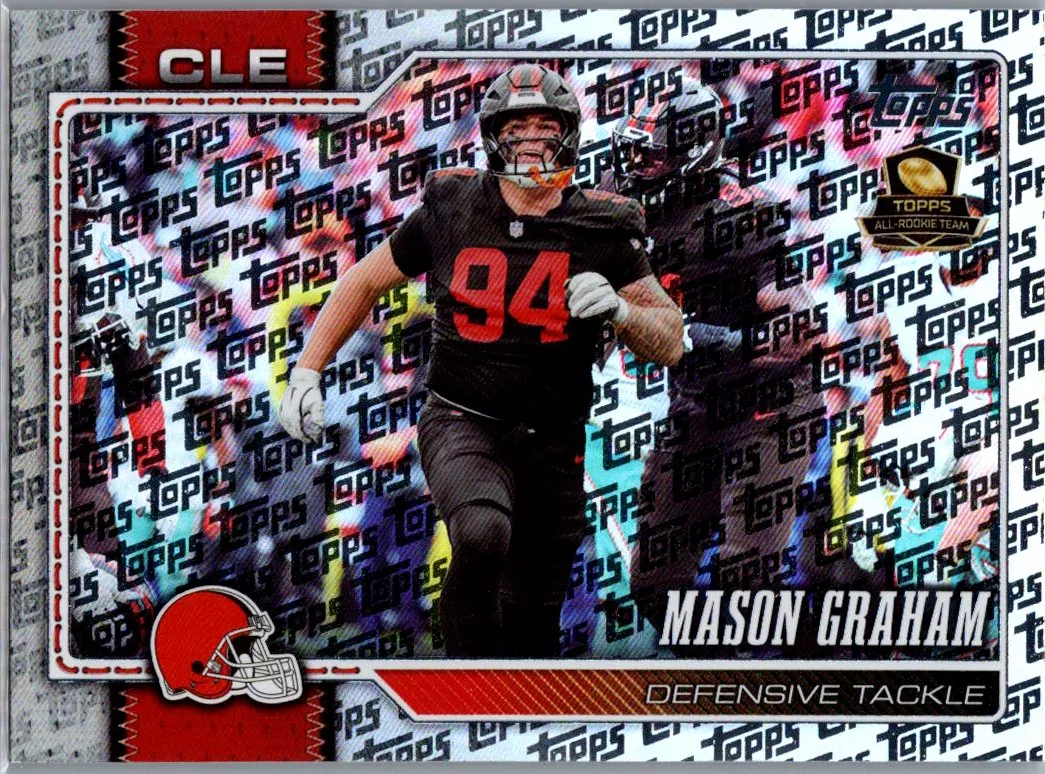
The best way to store sports cards is not one expensive product. It is a simple system: protect the cards you care about, sort the rest so you can find them, and keep everything in a stable indoor space. That system works whether you have a favorite rookie in a top loader, a team binder you flip through every week, or several boxes of cards still waiting to be sorted.
Start by thinking about how you use each card. A card you handle, display, trade, grade, or keep long term does not need the same home as a run of base cards. When the holder matches the job, storage becomes easier, not fussy. You spend less time digging through loose stacks and more time enjoying the cards you chose to keep.
Start with three groups, not one giant pile
Before buying a holder, make three broad groups: cards you would hate to damage, cards you want to browse or build into sets, and cards that are mainly there to sort, trade, sell, or keep as bulk. This first pass is useful because it prevents a common mistake, treating every card as if it needs the same level of protection.
Your first group might include a favorite player, rookie, autograph, serial-numbered card, vintage card, or a card with personal meaning. Give those cards the most deliberate protection. The second group might be a team collection, set binder, or cards you like to show friends. The third group can live in labeled storage boxes once it is sorted enough for you to find what you need. A low-cost card can still be important, and an expensive card can be less meaningful to you, so use your own collecting priorities rather than a rigid price rule.
If the pile feels overwhelming, work in short sessions. Pull out the cards you know you want to keep first. You can make finer decisions about parallels, duplicates, and trade stacks later. The point is to stop cards from being handled over and over while you decide what their long-term home should be.
Use the right layer of protection
A soft sleeve is the easy starting point for a card you want to keep clean. It helps protect the surface from fingerprints, dust, and minor scuffs while you move the card into a binder, rigid holder, or storage box. Choose clean sleeves made for standard cards, and use a size intended for thicker memorabilia cards rather than forcing them into something too tight.
For a raw card that needs more structure, a rigid top loader is a familiar choice. Sleeve the card first, then guide it gently into the holder. Top loaders make sense for cards you handle, display briefly, trade, or store outside a binder. A semi-rigid holder is a different tool. PSA’s current submission guidance calls for cards in sleeves and semi-rigid holders, not top loaders, when you are preparing cards for grading. That does not mean every card should be sent away. It means a grading submission deserves its own careful preparation.
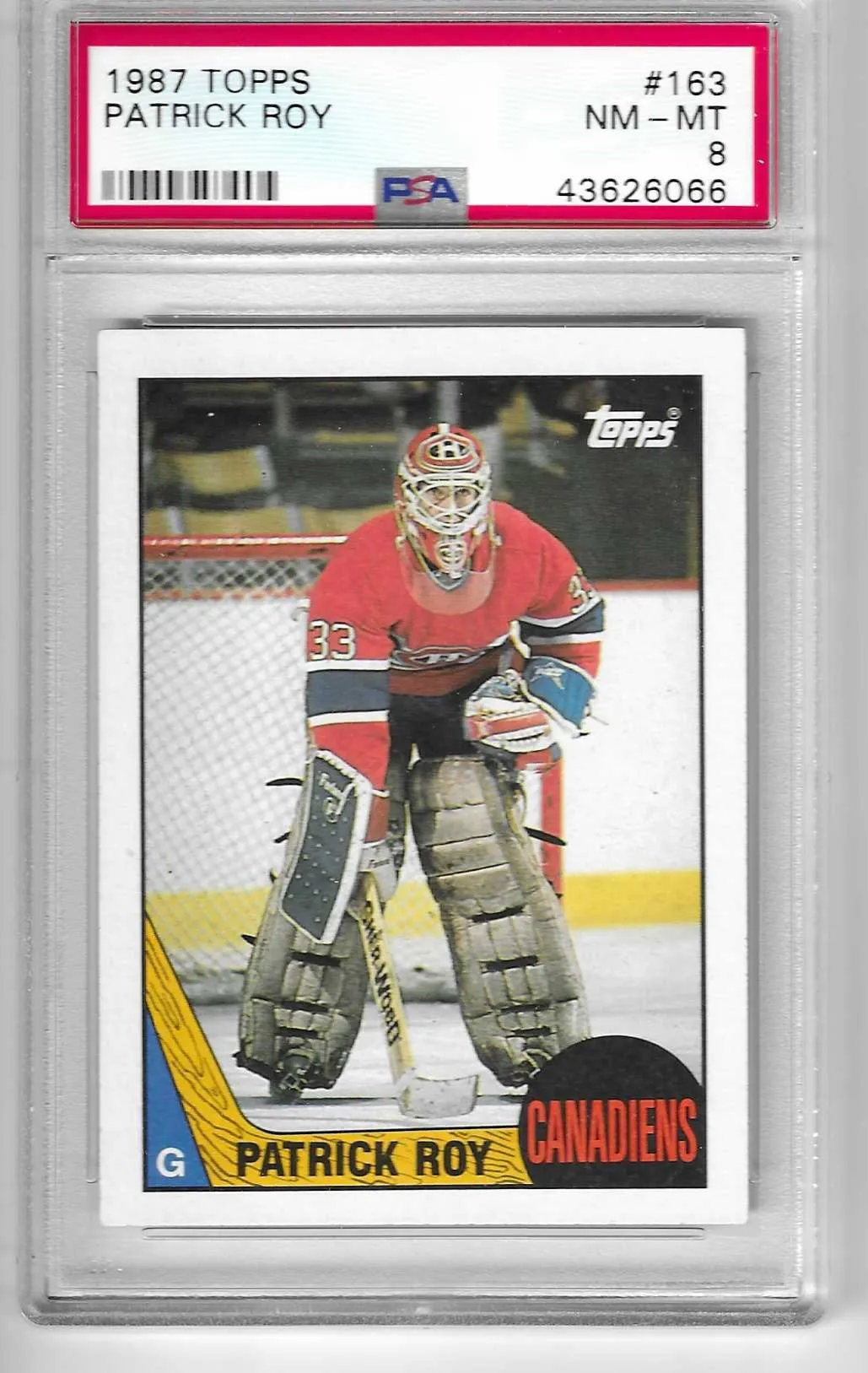
Magnetic holders can be a nice display option for a standout raw card, provided the holder matches the card’s thickness and the card is not shifting inside. A holder adds structure, but it cannot make a crowded shelf, a damp room, or rough handling safe. Think of protection in layers: sleeve first when appropriate, a holder when the card needs it, then a box, binder, or display space that keeps the whole group from getting bent or knocked over.
Choose binders, boxes, and slab storage by purpose
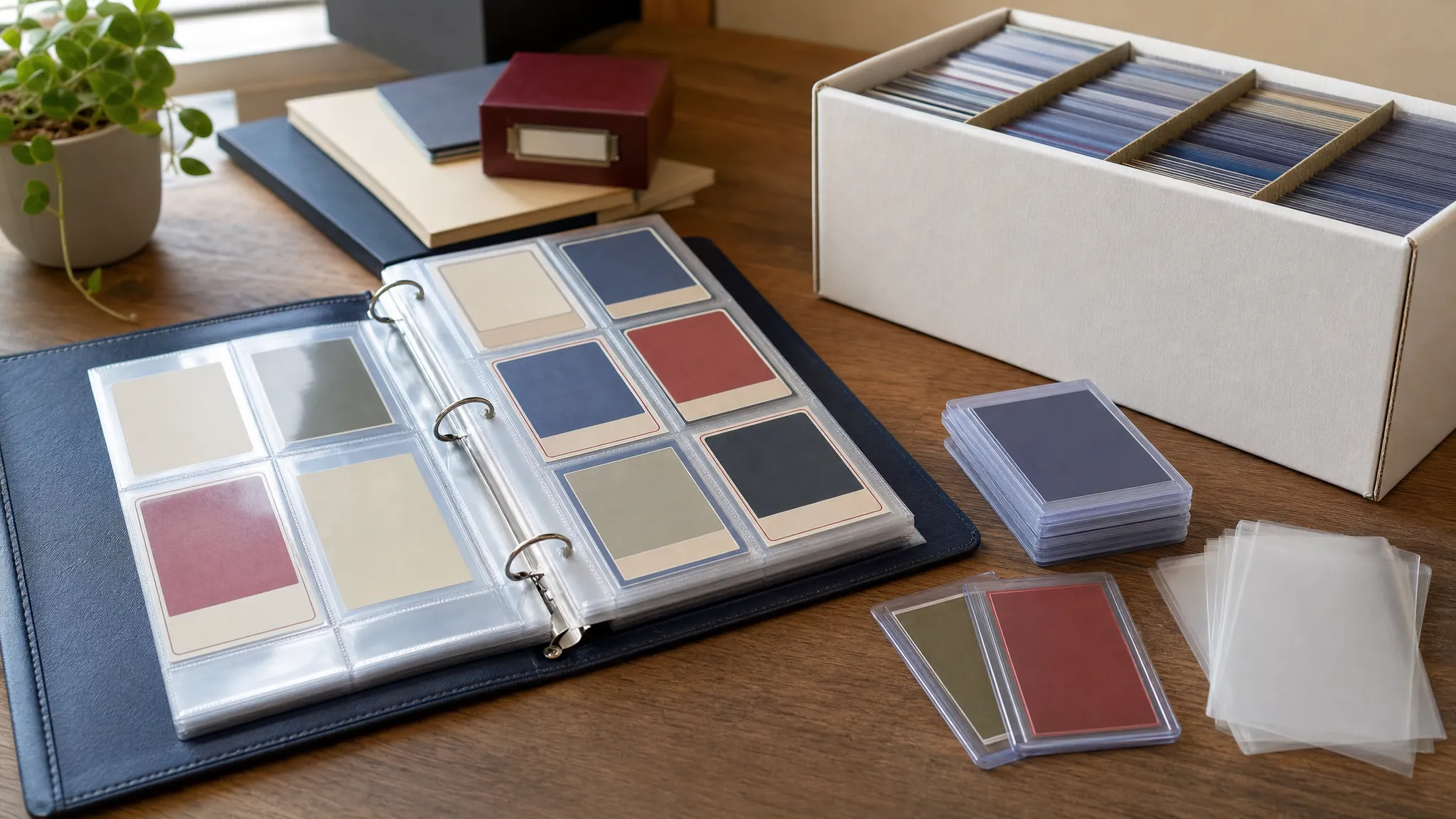
Binders are for cards you want to look through. They work especially well for set builders, player collections, team cards, and designs you enjoy seeing together. Use pages that fit the cards without stretching, do not overfill pockets, and avoid cramming so many cards into a binder that its pages bow. Keep the binder upright on a shelf and give it enough room that it is not being crushed by heavier items.
Storage boxes are the workhorses for larger groups. They keep cards upright, reduce dust, and make it much easier to separate a trade pile from a personal collection. Choose a box that fits the cards as they are stored. Loose or sleeved cards, top-loaded cards, and graded slabs have different dimensions. A box that is too large lets cards slump and slide. One that is too small creates pressure at corners and edges.
Use simple dividers and labels. A label such as “Lions, 2020–2024” or “Hockey rookies, trade” will help more than a perfect system you never maintain. Put the label on the end you will see when the box is shelved, then keep a little room in every row for cards to come out without pinching. If you have several boxes, number them. A small note that tells you which box holds a team or set can save an afternoon of unnecessary handling.
Graded cards deserve a box or divider system made for slabs. A slab is already a protective holder, but stacks of slabs can still slide, fall, or scratch each other. Store them upright when possible, keep the storage solution stable, and avoid balancing a loose tower on a desk or shelf edge. A slab sleeve can help keep the plastic case tidy, but it does not replace careful storage.
Keep the room as safe as the holder
Cards are made from paper and cardboard, so the room matters. The Library of Congress recommends a cool, dry, stable environment and minimal light exposure for paper collections. You do not need museum equipment for a home collection. A stable interior closet, office shelf, or bedroom cabinet is often a stronger choice than a garage, a hot attic, or a damp basement.
Keep cards off the floor and away from windows, pipes, vents, food, drinks, and direct sunlight. Even a strong holder is not a defense against a leak or a shelf that bakes in the afternoon. If a room is often musty, humid, very hot, or very cold, use another room if you can. The goal is steady conditions. Sudden swings in heat or moisture are harder on paper products than a normal, lived-in indoor space.
Light is another quiet problem. A display card can look great in a room, but it should not spend every day in direct sun. Rotate display cards, choose a spot away from the window, and keep the rest of the collection in a box or binder. This is not about turning your collection into an archive. It is about protecting the color, surface, and eye appeal that made you keep the card in the first place.
Set up your storage shelf for real life
A collection is easier to protect when the shelf does not fight you. Put the cards you reach for most at a comfortable height, with enough room to pull out one binder or box at a time. Keep heavier storage boxes on lower shelves so a bumped box cannot fall far. Leave a little open space around display cards rather than placing them at the front edge where a sleeve, backpack, or curious pet can catch them.
Think about what happens on an ordinary busy day. A box with a clear label and a stable shelf is more likely to be returned to its place than a pile that has to be carefully rebuilt every time. If you take cards to a show or trade night, give them a separate travel container. The container that works for a car ride, table, or backpack does not need to be the same system that keeps the collection settled at home.
Once or twice a year, take a quiet look through the storage area. Check for dust, dampness, a crowded row, a binder that is becoming too full, or a box that no longer matches what is inside it. This is also a good moment to move cards that have become favorites out of bulk and into sleeves or a binder. Small maintenance beats a major rescue project after something has already gone wrong.
Build a five-minute card routine
The storage system that lasts is the one you can use after every mail day, trade, pack opening, or show. Give yourself a tiny routine: set aside the keepers, sleeve what needs a sleeve, place cards in the correct binder or box, and put duplicates in a clearly marked trade or bulk group. Five minutes now prevents the loose pile that makes the next sorting session feel impossible.
For larger collections, choose one first sorting rule. You might separate by sport, then year and set. A player collector might use player, then season. A team collector might use team, then era. No single method is correct. The right method lets you find a card without removing ten other cards to get there. If you change the system later, change it deliberately rather than mixing several half-finished sorting methods in the same box.

A simple inventory can help, but it does not need to be elaborate. A note, spreadsheet, or collection app can record the player, year, set, card number, condition, and storage location for cards you would struggle to replace. The physical label still matters. A digital list is most useful when it tells you where the real card lives.
Common storage mistakes worth avoiding
- Loose stacks: A stack on a desk is easy to bump, rub, or forget. Even a basic box gives it a safer home.
- Forcing thick cards: A patch or memorabilia card needs a holder made for its thickness. Pressure can damage the card or the holder.
- Overfilling pockets and rows: If cards are hard to remove, they are too tight. Leave enough room for your fingers and future additions.
- Using one box for everything: Raw cards, top loaders, and slabs work better when their storage fits their shape.
- Keeping cards near heat or moisture: A closet in a stable part of the house is usually safer than a garage, attic, or damp basement.
- Handling every card to find one card: Labels, dividers, and a simple sorting rule protect the collection by reducing unnecessary handling.
How Cardboard Superstars helps
Once you know what needs protecting, browse collector supplies for sleeves, holders, and storage options that can fit the cards you decide to keep. If you are still choosing the exact card for a binder or display, the sports card singles page makes it easier to shop by sport and find a specific player or team. Our guide to buying sports card singles with confidence can help you compare the details before a card ever needs a sleeve.
A good storage system is not meant to make collecting feel precious or stressful. It gives your cards a home, makes the collection easier to share, and protects the moments you decided were worth keeping.
Frequently asked questions
What is the best way to store sports cards?
Give every card you care about a clean sleeve, add the right holder for cards that need more protection, then keep the collection upright in a properly sized binder or storage box in a stable indoor room. The best setup is the one you can maintain without bending, crowding, or losing cards.
Should sports cards go in sleeves before top loaders?
Usually, yes. A soft sleeve is the first layer against surface scuffs and fingerprints. Slide the sleeved card carefully into a clean, correctly sized top loader rather than forcing it into a tight holder.
Are binders safe for sports cards?
Binders can be a strong choice for cards you want to browse when pages fit the cards, pockets are not overfilled, and the binder stays upright. Keep especially valuable raw cards in a sleeve and rigid holder, and use a storage solution built for graded cards rather than stacking slabs loosely.
Can sports cards be stored in a basement or garage?
A consistently climate-controlled, dry space can work, but many basements and garages experience moisture or temperature swings. A stable interior closet or shelf is usually the safer starting point. Keep boxes off the floor and away from windows, pipes, food, and direct sun.
How should graded sports cards be stored?
Keep graded cards upright in a box designed for slabs or in another system that stops them from rubbing together. A slab protects the card from ordinary handling, but it still benefits from a clean, dry, low-light place and a storage method that prevents pressure or falls.
KEEP EXPLORING
Related posts
 Collector guide
How to Tell if Pokémon Cards Are Fake
A careful, collector-first way to compare Pokémon cards, check listings, and decide when to pause before buying.
Collector guideHow to Organize Pokémon Cards: A System That Grows With You
A practical way to sort Pokémon cards, protect the keepers, manage duplicates, and keep every new pack from becoming another loose pile.
 Collector guide
How Long Are Pokémon Sets Printed?
How long are Pokémon sets printed? There is no fixed schedule. Learn how to read restocks, reprints, and availability before you buy.